


The first time I had sex, there was no blood. It wasn’t painful, either. But I was super freaked out because, contrary to everything I’d ever heard about how my first time was going to go, my hymen didn’t break.
When I told a friend, she told me that she had to have sex a couple times before hers broke. We tried a couple more times, and still nothing. Did something happen to me when I was younger that I didn’t remember? Was I a freak? To be honest, I was really scared.
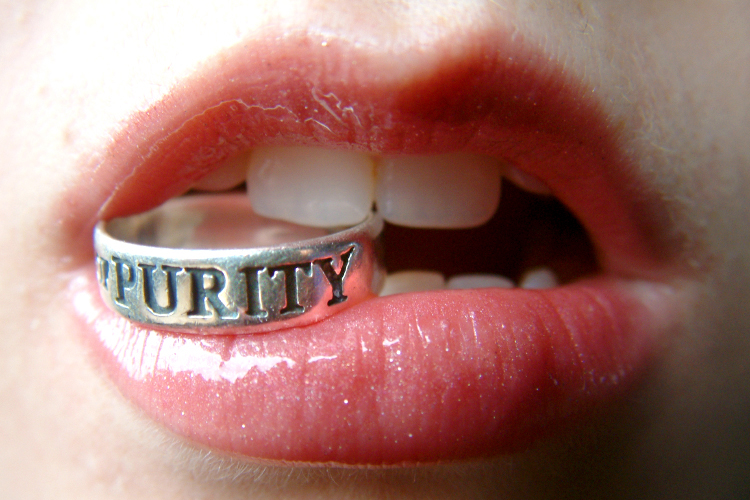
The fact is, some women are just born without a hymen and I happen to be one of them. And some girls have very thick ones that make sex painful. And some hymens stretch so much that they aren’t changed at all by intercourse. The fact is, every woman has a different experience with her hymen and none of them are indicative of her sexual purity. In fact, the notion that there is such a thing as sexual purity is pretty bunk.
The word, ‘hymen,’ originally just meant, ‘membrane,’ in ancient Greek, because that’s all it really is– a thin membrane partially covering the entrance of the vagina. But over time, the word took on new meanings, including as the Greek god of marriage, and an indicator for whether or not a woman was marriageable material.
In many cultures, before a woman was married, she would be examined to see if she still bore a hymen and was, therefore, still a virgin. Or, on the morning after her wedding, she would have to show off her bloody sheets to prove that her husband had taken a virgin that night. Of course, if there was no hymen or no blood to show, the consequences could be dire. Frankly, as a woman who never had one in the first place, the thought is pretty terrifying to me.
So, let’s clear up some of the mystery by exposing some common myths and highlighting some little known facts about the hymen and virginity.
MYTH #1: It’s perfectly normal to experience pain the first time you have sex.
FALSE: Nearly 63% of women don’t experience any discomfort their first time having sex.

When I was in sex-ed, they told us that no one want a piece of gum someone had already chewed. But if I were hiring a sous chef, I’d prefer someone who had cooked before. Also it’s weird to compare humans to used chewing gum. Just don’t.
MYTH #2: Pain during your first intercourse is just your hymen breaking.
FALSE: The pain women experience the first time they have sex is usually not due to the hymen breaking. In fact, the reason it hurts so much is probably because a) the woman might be nervous and have trouble getting aroused and lubricated, which would lead to a painful insertion or b) both partners may be inexperienced and over-eager, which could lead to a minor injury. In both cases, it’s most likely your vaginal tissue that’s bleeding, not your hymen.

A colloquial term for losing your virginity is to have your cherry popped. This is not because having sex for the first time smells like cherries. On the contrary, it smells like sex.
MYTH #3: The hymen is there to tell if a woman is a virgin or not.
FALSE: No one really knows what hymens are or what they’re there for. One theory is that they were a genetic deformity that was accidentally spread through many cultures when women with intact hymens were preferred for marriage. Another theory is that it served some purpose as a fetus, perhaps to prevent bacteria from going into the vagina. But as far as we know, they serve no purpose.
Also, the hymen can break in a number of ways– from horseback riding to just slowly wearing down over time. I knew a girl who broke hers by falling between the bars on a trampoline. We might have teased her that her first boyfriend was a trampoline, but it didn’t make her impure or turn her into a bad person. And it definitely didn’t mean she had sex with a trampoline.
Hymens come in all different shapes and sizes. Most of the time, they don’t even cover the entire vaginal opening, so menstrual blood can still leave the body. If they do cover the entire vaginal opening, a doctor will need to correct that to make both menstruation and intercourse less painful.
Not even a doctor can tell if you are a virgin by looking at your hymen/how big your vagina is. There is only one comprehensive test a doctor can do to tell if you’re a virgin.
Doctor: Are you a virgin?
You: Yes/No.
That’s it. That’s the only way. You don’t have a, “Seal pops if fresh,” lid on your cervix.

MYTH #4: The hymen/virginity myth doesn’t hurt anyone. In fact, it makes women less promiscuous and less likely to engage in risky sexual behavior by encouraging them to keep their virginity as long as possible.
FALSE: The hymen myth is very harmful. Why?
- It teaches women that it’s OK for sex to hurt. It’s not supposed to (I mean, unless you want it to). If it it does the first few times, it’s alright because you’re still just figuring things out. But if it continues to hurt, there’s a problem. Either your partner is hurting you (most likely unaware) or you might have something wrong inside (such as having a completely intact hymen) and you’ll need to see a doctor.
- It excludes the queer experience. By saying that women can only lose their virginity when they have a penis enter their vagina, we’re excluding women who have healthy and fulfilling sexual lives but never sleep with a man, as well as women who don’t have vaginas. We’re also discounting the experiences of men, who don’t have hymens or anything similar.
- This opens us up to a whole slew of dangerous questions, such as: does oral, anal, or manual sex count as sex if there’s no penetration? If you are forced to have one of those, does it still count as rape if they don’t count as ‘real’ sex?
- It leads to abuse, bullying, violence, and sexual assault by people who believe that a woman’s only worth is her sexual purity. We mentioned above that throughout history, women who did not bleed on their wedding night could face severe consequences, but this isn’t a thing of the past. There are still cultures around the world that practice this medically invalid ritual and there are still women who are hurt or even killed for being deemed impure. But it can happen in Western countries too. How many girls do you know of who are bullied or called sluts for openly enjoying something most people enjoy in private?
- It makes sex–which is a wonderful, natural, and awesome thing–shameful for many women. This can lead to depression, substance addiction, and unhealthy sex lives or habits. Making safe sex an open topic leads to people being more knowledgeable and less afraid of asking questions, which, in the end, makes them safer and less likely to take risks.

If you lose your virginity and take someone else’s, are you a virgin again? If two virgins have sex, does that make them both virgins all over again?
MYTH #5: Breaking the hymen is the only way for you to lose your virginity.
FALSE: You lose your virginity when you think you do.
Look, it isn’t like you’ll be killed in a horror movie if you’ve had a penis inside of you. It isn’t like you gain a sacred, ancient knowledge when you finally indulge in the sins of the flesh. Most of the time, there’s no real physical change that occurs when you lose your virginity, so the emotional and spiritual aspect only has relevance if you think it does. And if it does, more power to you.
But if it doesn’t, you aren’t bad, you aren’t ruined, and you aren’t impure. You’re experiencing one of the most pleasurable, intimate parts of the human experience. As long as you are safe, lawful, and all parties are consenting and understanding of the potential consequences, rock on.